Condition Monitoring

Condition Based Monitoring Services

Advanced monitoring technologies to predict and prevent equipment failures before they disrupt operations.

Comprehensive Condition Monitoring Solutions

Our condition monitoring services utilize cutting-edge technologies to detect potential issues before they become costly failures. From thermal imaging to ultrasonic analysis, we provide comprehensive monitoring solutions for electrical and mechanical systems.

Infrared Thermographic Surveys

Infrared thermographic surveys use specialized cameras to detect infrared radiation, converting it into visual thermal images (thermograms) that show temperature distributions. This non-contact, non-destructive method is powerful for predictive and preventative maintenance.

Key Benefits

  • Early identification of faults and potential failures in electrical and mechanical systems
  • Detection of building issues like air leaks and insulation problems
  • Non-contact, non-destructive testing method
  • Prevents costly equipment failures and unexpected shutdowns
  • Helps prevent property damage and saves businesses money
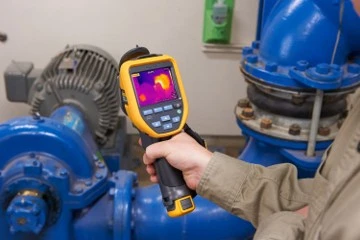
Thermal Imaging Equipment

Gas Leakage Detection Services

Gas leakage detection services use various technologies, including infrared cameras, tracer gas, and ultrasonic equipment, to locate gas leaks in industrial and residential settings.

Ultrasonic Detection

Utilizes airborne ultrasonic equipment to identify the sound or acoustic signature of compressed gas leaks. This method is highly effective for detecting leaks in pressurized systems and can identify even small leaks that might not be visible to the naked eye.

Applications

  • Industrial gas systems
  • HVAC systems
  • Compressed air systems
  • Steam systems
  • Refrigeration systems
Gas Leak Detection Equipment

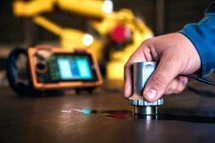
Ultrasonic Analysis of Electrical Components

Ultrasonic non-destructive testing (NDT) is a versatile technique for material analysis, primarily known for thickness gaging, flaw detection, and acoustic imaging. High-frequency sound waves can discriminate and quantify mechanical, electrical, structural, or compositional properties of solids and liquids.

Areas of Application

  • Leak Detection
  • Electric Arc, Corona, Tracking Detection
  • Monitoring Bearing Wear
  • Locating Faulty Valves
  • Electrical component inspection
  • Mechanical fault detection
Ultrasonic Testing Equipment

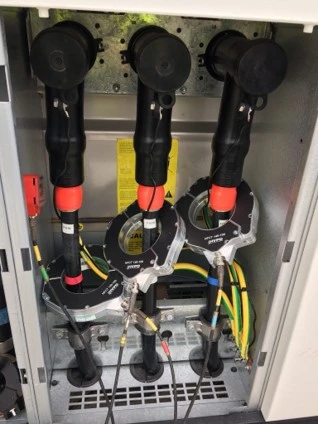
Partial Discharge Monitoring of HV Equipment

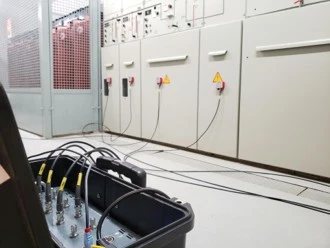
Partial Discharge (PD) monitoring of high-voltage transformers and switchgears detects early signs of insulation degradation, preventing catastrophic failures and ensuring operational reliability. Specialized sensors capture electromagnetic, acoustic, or gas-based signals generated by localized electrical discharges.

Key Features

  • Detects insulation defects like voids or contamination
  • Continuous, real-time, or scheduled monitoring
  • Condition-based maintenance approach
  • Prevents unplanned outages
  • Provides valuable data for informed maintenance decisions
Partial Discharge Monitoring Equipment

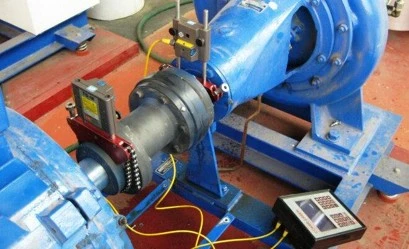
Phase Current Signature Analysis of LV and HV Motors

Motor current signature analysis (MCSA) has proven to be a highly valuable predictive maintenance tool. Although it is a relatively young, rarely utilized technology, it is rapidly gaining acceptance in industry today.

How It Works

MCSA is simply the process by which motor current readings are recorded and analyzed in the frequency domain. It has been around since 1985 and proven itself well over the years in locating rotor faults and air gap problems in motors.

Benefits

  • Mechanical faults related to belts, couplers, alignment and more are easily found
  • Uses demodulated current spectrum analysis
  • Locates rotor faults and air gap problems
  • Proven technology since 1985
  • Highly valuable for predictive maintenance
Motor Current Analysis

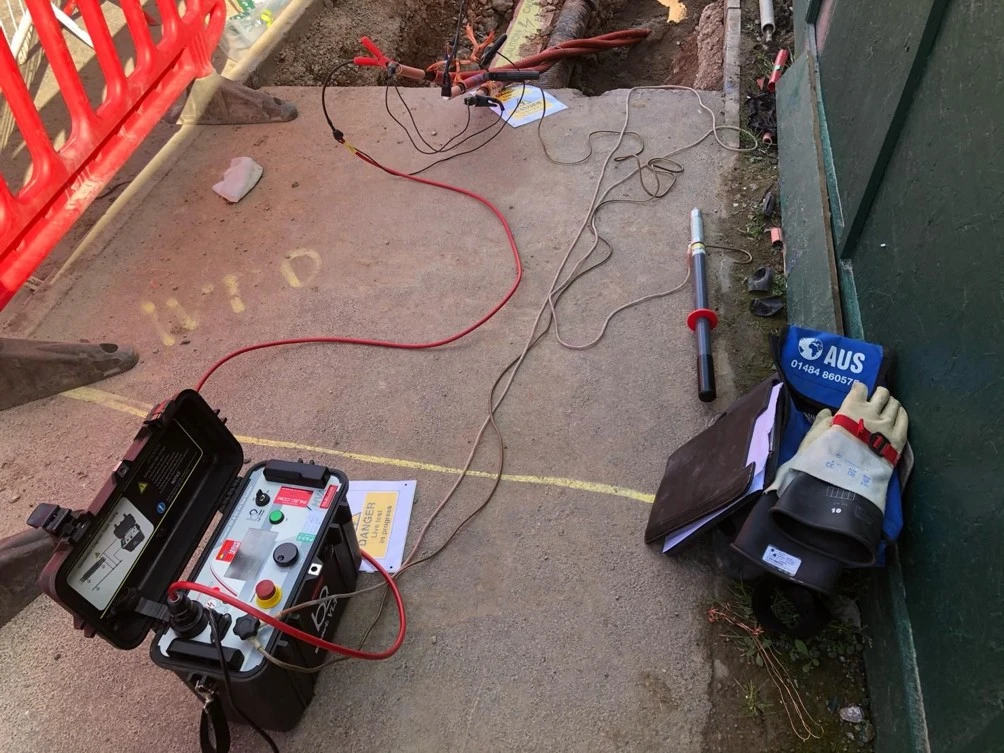
Cable Partial Discharge Measuring Systems

Cable Partial Discharge (PD) Measuring Systems are crucial diagnostic tools for assessing the condition of insulation in medium- and high-voltage (MV and HV) power cables. Partial discharges are minor electrical sparks occurring within insulation defects, serving as an early indicator of insulation degradation.

Key Benefits

  • Early detection of insulation degradation
  • Prevents catastrophic cable failures
  • Reduces costly unplanned outages
  • Improves system reliability
  • Enables predictive maintenance
Cable PD Testing Equipment

Partial Discharge Survey of Rotating Equipment

A Partial Discharge (PD) survey is a non-destructive test for rotating electrical machines. Its purpose is to detect small electrical discharges in the stator insulation, which, if unaddressed, can lead to major failures.

Survey Methods

  • Online Testing: Conducted while the machine is running
  • Offline Testing: Conducted when the machine is shut down

Benefits

  • Identifies and locates insulation defects
  • Detects manufacturing flaws
  • Identifies thermal aging issues
  • Enables timely maintenance
  • Prevents costly unplanned outages
  • Both methods offer valuable insights into stator winding health
Rotating Equipment PD Survey

Isolation Oil Analysis using Acoustic Spectroscopic Method (DGA)

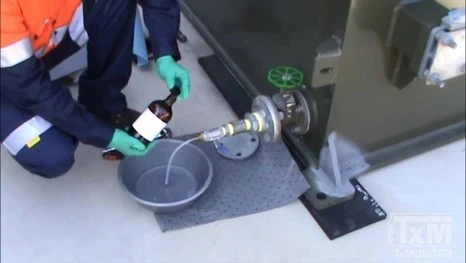
Transformer Dissolved Gas Analysis (DGA) involves collecting an oil sample, extracting dissolved gases from the sample, and analyzing these gases via gas chromatography to identify the type and concentration of specific fault gases.

Analysis Process

  1. Collect an oil sample from the transformer
  2. Extract dissolved gases from the sample
  3. Analyze gases via gas chromatography
  4. Identify type and concentration of fault gases
  5. Interpret results for transformer health assessment

Fault Gases Detected

  • Hydrogen (H₂)
  • Methane (CH₄)
  • Acetylene (C₂H₂)
  • Ethylene (C₂H₄)
  • Ethane (C₂H₆)

Benefits

  • Reveals transformer health status
  • Indicates thermal faults or partial discharges
  • Crucial for preventive maintenance
  • Prevents transformer failures
  • Enables condition-based maintenance
DGA Analysis Equipment

Ready to Implement Condition Monitoring?

Contact our experts to discuss your condition monitoring needs and get a customized solution for your equipment.